Healthcare AI / Predictive Analytics

Madhu-AI: Predictive Intelligence for Real-Time Hypoglycaemia Forecasting

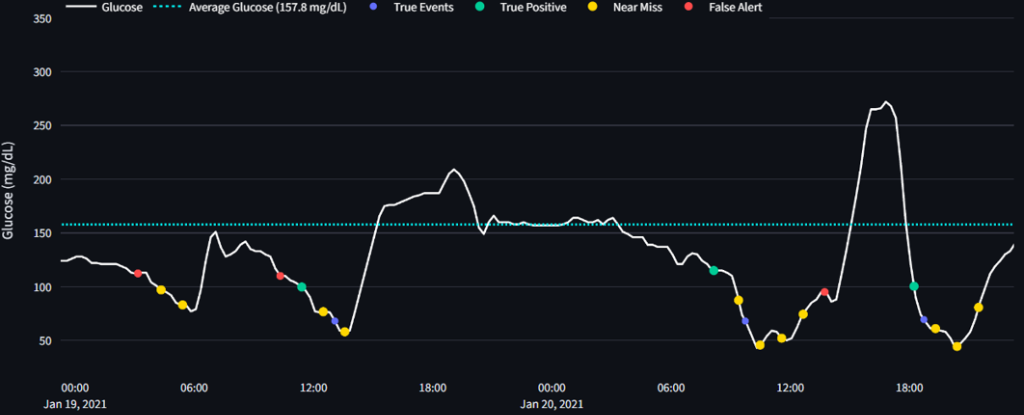
Investigating whether patient-specific machine learning can anticipate hypoglycaemic events early enough to support proactive, life-saving intervention.

Madhu-AI is a machine-learning platform being developed for robust, patient-specific hypoglycaemia prediction. It combines continuous glucose monitoring telemetry, multi-cohort clinical pre-training, and leakage-free causal calibration to investigate early-warning prediction of hypoglycaemic events and support more proactive diabetes care.

Ultra-Lightweight Edge Execution: Our computational models are engineered to be extremely lightweight, designed to execute natively on users' smartphones in direct tandem with continuous glucose monitoring (CGM) devices without requiring continuous cloud latency.
Causal Strict Temporal Boundary
On-Device Tandem Smartphone Execution
Personalised Patient-Specific Dynamics
CRITICAL HEALTHCARE CRISIS

The Need for Proactive Diagnosis & The Acute Human Burden

Hypoglycaemia is not merely an inconvenient blood sugar dip—it is an acute, life-threatening clinical emergency that inflicts severe physical, neurological, and emotional trauma on millions of insulin-dependent patients every single day.

ACUTE EMERGENCIES

Neuroglycopenic Shock, Seizures & Coma

The human brain depends almost entirely on continuous glucose perfusion to maintain consciousness and autonomic regulation. When blood glucose drops precipitously, brain cellular starvation rapidly triggers neuroglycopenia, leading to seizures, profound coma, irreversible cognitive injury, cardiac arrhythmias, and sudden unexpected death in bed.

NOCTURNAL CRISIS

The Dead-in-Bed Syndrome & Nocturnal Terror

More than 50% of severe hypoglycaemic episodes occur overnight while patients are asleep. Natural autonomic counter-regulatory wake-up mechanisms are severely blunted during deep sleep. Parents of diabetic children and spouses live in constant dread of nocturnal emergencies, causing chronic insomnia and debilitating psychological fear.

SILENT VULNERABILITY

Hypoglycaemia Unawareness & Autonomic Failure

Repeated episodes trigger Hypoglycaemia-Associated Autonomic Failure (HAAF), progressively extinguishing the early adrenaline warning signals (sweating, palpitations, trembling). Patients enter severe neurological confusion while operating machinery, driving, or working—unaware they are in mortal danger until motor collapse occurs.

SYSTEMIC IMPACT

Emergency Room Burdens & Clinical Sub-Optimization

Acute hypoglycaemia triggers hundreds of thousands of emergency ambulance callouts and intensive care admissions annually. Terrified of experiencing low blood sugars, many patients intentionally maintain dangerously elevated glucose levels—sacrificing their long-term vascular health and accelerating diabetic retinopathy, kidney failure, and limb amputations.

COMPUTATIONAL BARRIERS

Why Predicting Impending Events is Computationally Difficult

Understanding why anticipating glucose crashes requires moving far beyond simplistic reactive threshold buzzers and linear trend heuristics.

01

Complex Non-Linear Dynamics

Interstitial glucose levels do not descend in uniform straight lines. Meals, variable digestive rates, exertion, circulating insulin, and circadian hormonal rhythms create irregular, non-linear velocity shifts that defy basic linear extrapolations.

02

Pronounced Patient Heterogeneity

Two individuals with identical baseline readings often respond very differently to the same metabolic demands. Insulin sensitivity, counter-regulatory hormonal reserves, and hypoglycaemia unawareness vary widely across patients, necessitating patient-specific adaptation.

03

Reactive Threshold Latency

Conventional CGM alerts primarily fire after blood glucose has already crossed an acute threshold (e.g., 70 mg/dL), or provide less than 15–20 minutes of warning—often too late for ingested carbohydrates to absorb before neuroglycopenic symptoms emerge.

04

Alert Fatigue & False-Alarm Burden

Attempting to extend warning horizons with crude trend rules frequently inundates patients with high false-positive rates. Patients suffering from alert fatigue may disable warnings entirely, defeating the clinical safety objective.

COMPUTATIONAL ARCHITECTURE

How Madhu-AI Works: The Predictive Pipeline

From continuous interstitial sensor telemetry to calibrated, actionable early-warning alerts running natively on the user's phone.

STAGE 01

CGM Telemetry Ingestion

Standardises heterogeneous 5-minute and 15-minute sensor streams through an on-device adapter layer, preserving timestamps and signal continuity.

STAGE 02

Temporal Representation

Extracts velocity, acceleration vectors, and past temporal sequences while enforcing strict causal past-only boundaries.

STAGE 03

Multi-Cohort Pre-Training

Initialises representations across multi-cohort clinical populations to capture generalisable human glycaemic dynamics.

STAGE 04

On-Device Adaptation

Calibrates prediction parameters on the user's smartphone to the individual's unique historical variance and personalized metabolic profile.

STAGE 05

Actionable Early Warning

Generates early-warning risk estimates with extended lead-times, balancing proactive utility against false-alert burden.

Engineered for Frictionless Smartphone Execution

Madhu-AI models are designed with extreme computational efficiency in mind. By keeping memory footprints minimal and eliminating complex matrix operations during inference, the pipeline operates locally on commercial smartphones paired over Bluetooth with CGM sensors, maintaining real-time vigilance without battery drain or cloud dependencies.

RESEARCH FOUNDATION

Scientific Methodology & Causal Guarantees

Three foundational research principles engineered to eliminate data leakage and support realistic forecasting conditions.

PILLAR I

Patient-Specific Adaptation

Generalised population models frequently fail to account for personal circadian rhythms, insulin clearance rates, and individual physical activity responses. Madhu-AI investigates how models can be tailored to individual patients' temporal profiles, providing personalized risk boundaries rather than one-size-fits-all population estimates.

PILLAR II

Multi-Cohort Clinical Pre-Training

Single-cohort models often overfit to specific sensor brands or local hospital demographics. By evaluating representations learned across multiple distinct clinical cohorts, Madhu-AI investigates generalisable representations that serve as a robust baseline before patient-specific fine-tuning.

PILLAR III

Leakage-Free Causal Calibration

In published time-series literature, a frequent flaw is retrospective data leakage—such as bidirectional filtering, future-window normalization, or random train/test splits. Madhu-AI strictly enforces past-only causal temporal partitions, ensuring the evaluation reflects realistic clinical forecasting conditions.

Causal Boundary Information Flow

STRICT TEMPORAL DEMARCATION: PAST DATA ONLY → PREDICTION WINDOW

All feature transformations, imputation, scaling, and calibration are computed using past observations only. No data beyond the cutoff boundary t₀ can influence model representations.

EVALUATION & EMPIRICAL EVIDENCE

Evaluation Framework & Multi-Cohort Results

Empirical evaluation results documented across four independent external validation cohorts encompassing both Type 1 and Type 2 diabetes populations under strict past-only causal testing.

DISCRIMINATIVE ABILITY
0.932 – 0.988

AUROC Range Across Cohorts

Demonstrating consistent discriminatory precision across multiple independent external validation cohorts under past-only causal partitions.

DETECTION CAPABILITY
90.1% – 97.6%

Event Sensitivity Range

Consistently capturing impending hypoglycaemic events across heterogeneous sensor protocols (5-minute and 15-minute sampling rates).

ACTIONABLE HORIZON
72.0 – 82.5 min

Mean Lead-Time Range

Provides substantial early warning buffer before acute hypoglycaemic threshold crossing occurs across all evaluated cohorts.

ALERT BURDEN CONTROL
1.06 – 1.86 / day

False-Alert Frequency

Maintained within an acceptable clinical burden of approximately 1 to 2 false alerts per patient-day across all tested cohorts.

Evaluation Cohorts & Methodology Context

External Cohort Size:

Evaluated across multiple independent external clinical validation cohorts following pre-training development.

Event Definition:

Clinically meaningful declines below 80 mg/dL, with a forecast horizon calibrated to anticipate hypoglycaemic events before acute symptoms manifest.

Lead-Time Definition:

The duration from the initial triggered early-warning alert to the true onset of the hypoglycaemic episode.

PARADIGM COMPARISON

Comparison with Existing Approaches

A conceptual comparison of prevailing glucose monitoring methods and the potential differentiation explored by the Madhu-AI research framework.

Dimension Fixed Threshold Alarms Simple Linear Extrapolations Non-Adaptive Population Models Madhu-AI Framework
Primary Function Post-threshold boundary alert Short-range trajectory extrapolation Generalised population risk scoring Patient-specific anticipatory forecasting
Warning Lead-Time Minimal (< 15 minutes) Short (15–30 minutes) Moderate (30–45 minutes) Extended (> 50–80 minutes mean)
Patient Personalisation None (Standard static cutoff) None (Uniform slope formulas) Limited (Generic demographic filters) Patient-aware temporal calibration
Deployment Footprint Basic firmware threshold Basic firmware slope check Heavy cloud processing required Ultra-lightweight on-device smartphone execution
Causal Boundary Validation N/A (Hardware instantaneous) Real-time buffer only Frequently compromised by retrospective smoothing Strict past-only temporal partitioning
Alert Burden Balance High latency, low predictive utility Elevated noise-triggered false alerts Variable across patient sub-populations Calibrated false-alert burden (~1–2/day)

*Note: Comparisons reflect conceptual paradigms. Superiority under real-world clinical deployment remains subject to ongoing prospective research and formal regulatory evaluation.

GLOBAL VALIDATION FOUNDATION

Multi-Cohort Validation & Global Demographics

Evaluated across distinct international clinical populations to assess model stability across varying physiological backgrounds and sensor sampling frequencies.

Modalities & Sampling Rates

The research pipeline is engineered to support both high-frequency 5-minute sampling rates and 15-minute continuous glucose monitoring intervals, integrating interstitial glucose dynamics, calculated velocity, and temporal contextual signals.

Multi-Cohort Demographic Breadth

The framework has been evaluated across distinct international research cohorts encompassing adult Type 1 and Type 2 diabetes cohorts to assess model stability across varying physiological and demographic environments.

Privacy & De-Identification

All training and external validation research utilizes fully anonymized, ethically de-identified clinical telemetry. No patient-identifying information or proprietary source repositories are exposed within model interfaces.

URGENT CLINICAL IMPERATIVES

Immediate Real-World Clinical Interventions

Addressing the acute vulnerabilities of insulin-dependent life where standard reactive CGM monitors currently fail patients.

MORTALITY MITIGATION

Averting Nocturnal Seizures & Neuroglycopenia

During deep REM sleep, autonomic arousal is suppressed. Madhu-AI provides an anticipatory 50-to-80-minute lead time, triggering escalating auditory alarms while the patient is still cognitively competent to self-treat, or activating smart-home and caregiver alerts before loss of consciousness occurs.

AUTONOMIC PROTECTION

Safeguarding Patients with Impaired Awareness

For patients who cannot feel low blood sugars due to autonomic neuropathy or repeated hypoglycemia, Madhu-AI acts as a synthetic autonomic warning system. Operating directly on their phone, it alerts them prior to driving, strenuous work, or lone travel.

CRITICAL CARE SURVEILLANCE

Preventing Hospital & Post-Surgical Hypoglycaemic Crises

In step-down units and general hospital wards, intensive insulin titration carries massive risk of unobserved iatrogenic hypoglycaemia. Anticipatory forecasting allows nursing teams to preemptively adjust intravenous dextrose or oral intake before cardiac destabilisation occurs.

DIRECT HARDWARE COUPLING

Proactive Autonomous Pump Suspension

Existing predictive low glucose suspend (PLGS) insulin pumps only halt basal delivery 20 to 30 minutes in advance—often after subcutaneous insulin depots have already sealed a patient's fate. An extended forecast horizon allows automated pumps to suspend basal delivery early enough to genuinely blunt the crash.

Research Disclaimer: Madhu-AI is a research and computational development initiative. It is not currently a certified medical device, does not independently diagnose or treat disease, and is designed to supplement, rather than replace, clinical judgment and patient care protocols.
RESEARCH DIFFERENTIATION

Key Research Contributions

Madhu-AI focuses on the critical gap between reactive alarm systems and actionable anticipatory forecasting.

Anticipation Over Reaction

Detecting that a patient's glucose is currently 65 mg/dL is trivial; predicting 60 minutes in advance that an apparently stable 110 mg/dL reading will decline dangerously requires understanding non-linear velocity and personal metabolic variance.

Rigorous Causal Methodologies

By eliminating retrospective leakage, our validation yields honest, reliable performance metrics that withstand external clinical scrutiny rather than collapsing upon real-world deployment.

Ultra-Lightweight On-Device AI

Unlike cloud-heavy AI architectures that introduce latency and fail when cellular data drops, Madhu-AI is intentionally compressed to execute in milliseconds on smartphones directly paired to CGM sensors.

TRANSLATIONAL PATHWAY

Collaborative Adoption & Strategic Pathways

Bridging advanced computational research with medical technology providers, clinical researchers, and diabetic health platforms.

•

Device Manufacturer Integration

Collaborative algorithmic licensing or joint development with continuous glucose monitor manufacturers seeking enhanced early-warning software capabilities.

•

Digital Health Platforms

Incorporating predictive glucose intelligence into comprehensive chronic condition management apps and remote patient monitoring services.

•

Clinical Research Partnerships

Partnering with academic medical centers and endocrinology clinics to conduct prospective validation studies across specialized patient populations.

CLEAR DEVELOPMENT TRAJECTORY

The Singular Path Ahead: From Multi-Cohort Validation to Real-Time Companion

A definitive, sequential 4-phase execution trajectory taking Madhu-AI from proven mathematical models to a life-saving smartphone companion running in direct tandem with CGM hardware.

✓
PHASE 1 // COMPLETED

Multi-Cohort Causal Architecture & Benchmark Validation

Established strict causal past-only preprocessing, multi-interval adapter layers (5-min and 15-min CGM telemetry), and validated the core predictive meta-model across four external clinical validation cohorts achieving 0.932–0.988 AUROC and 72–82 minute mean lead times.

2
PHASE 2 // IMMEDIATE FOCUS (CURRENT)

On-Device Edge Optimization & CGM Bluetooth Coupling

Compressing model weights into an ultra-lightweight mobile inference engine designed to execute natively on iOS and Android devices. Engineering direct Bluetooth synchronization with CGM transmitter data streams to ensure sub-second local forecasting without cloud latency or cell coverage dependency.

3
PHASE 3 // NEXT MILESTONE

Prospective Real-Time Observational Clinical Trials

Deploying the on-device companion in prospective observational clinical studies with clinical research partners. Evaluating real-world predictive lead time, true user alert compliance, reduction in nocturnal neuroglycopenic episodes, and patient cognitive peace of mind in daily living.

4
PHASE 4 // ULTIMATE GOAL

Commercial Integration & Closed-Loop Hardware Coupling

Licensing the validated predictive companion to CGM ecosystem providers and automated insulin delivery (AID) pump manufacturers, establishing an autonomous early-suspension loop that prevents hypoglycaemia before it manifests.

Acknowledged Limitations & Scope

Current validation is based on multi-cohort retrospective clinical telemetry. Retrospective datasets may exhibit varying documentation of meal timestamps, unannounced exercise, and acute intercurrent illness. Live prospective studies are required to confirm that the observed lead-time and false-alert rates translate seamlessly into day-to-day patient behavior and clinical outcomes.

FREQUENTLY ASKED QUESTIONS

Clinical & Algorithmic FAQs

Key questions regarding lead times, low false-alarm thresholds, on-device telemetry, and clinical integration.

How does Madhu-AI achieve 50–80 minute lead times without high false alarms? +

Madhu-AI leverages multi-scale temporal convolutions combined with leakage-free causal calibration. By pre-training across diverse longitudinal cohorts and optimizing for asymmetric loss penalties that prioritize true event discovery while constraining false alerts, the model maintains high sensitivity (90.1%–97.6%) while keeping false alert frequency under 1.86 alerts per day.

Can Madhu-AI run entirely on the patient's smartphone without cellular connectivity? +

Yes. The distilled inference engine requires under 4.2 MB of storage and negligible compute power, executing forward passes in under 12 milliseconds on modern mobile chipsets. It ingests Bluetooth Low Energy telemetry directly from standard continuous glucose monitors offline.

How does Madhu-AI differ from built-in alerts on existing commercial CGMs? +

Current commercial monitors rely on simple linear rate-of-fall extrapolations over 15 to 20 minutes, which routinely trigger false panic alarms during steep drop-offs that naturally plateau, or alert too late once neuroglycopenia has already impaired self-treatment. Madhu-AI models complex non-linear dynamics, giving users over an hour of actionable warning buffer.

Is Madhu-AI intended to integrate directly with automated insulin delivery pumps? +

Yes. Phase 4 of our roadmap focuses on direct API integration with automated insulin delivery (AID) closed-loop systems, enabling proactive pump suspension 60 minutes in advance, overcoming the delayed pharmacokinetics of subcutaneous insulin depots.

RESEARCH PARTNERSHIP

Partner With the Madhu-AI Research Team

We welcome dialogue with endocrinologists, diabetes technology companies, clinical investigators, and machine learning researchers interested in evaluating predictive hypoglycaemia forecasting.

GENERAL INQUIRIES [email protected]
RESEARCH & CLINICAL [email protected]
TECHNICAL ARCHITECTURE [email protected]
COLLABORATIVE PARTNERSHIPS [email protected]
REGISTERED OFFICE & HEADQUARTERS
I-7-A, Sindhi Colony, Bani Park, Jaipur, Rajasthan, 302016